
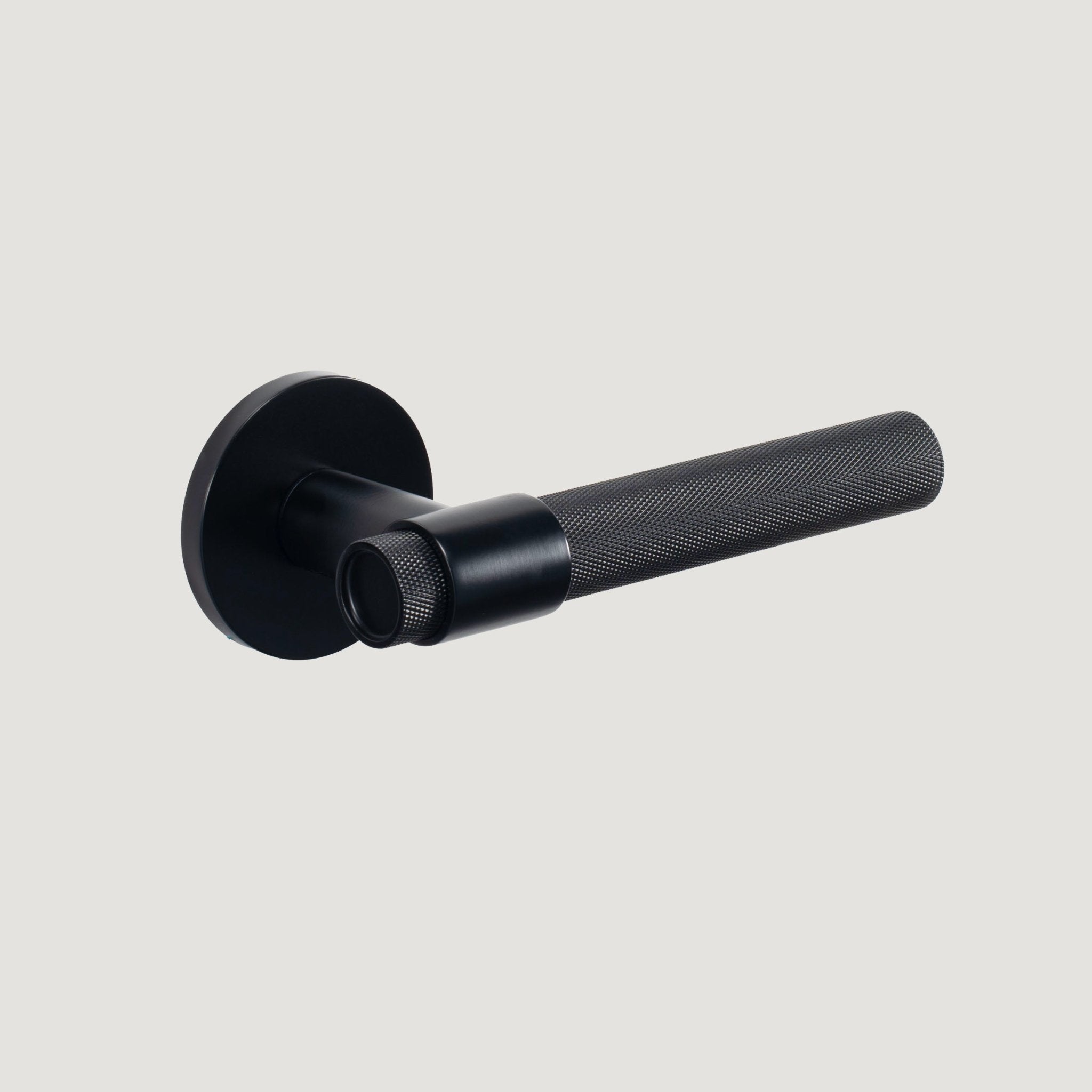
Why Solid Brass Door Handles Change a Room
A door handle is touched more often than almost any other finish in a home. It is the small, repeated moment that can make a bedroom door feel considered, a bathroom feel private and composed, or a new kitchen feel connected to the rest of the interior. Solid brass door handles bring a particular quality to that interaction: real weight in the hand, a gentle warmth against the palm and the quiet visual depth of metal made to last.
For a premium renovation or custom build, the decision is rarely just brass versus another finish. The more useful question is how the handle will relate to the door profile, cabinetry, tapware, lighting and the materials that frame it. When specified well, door hardware becomes part of the architecture rather than an afterthought fitted at the end.
What makes solid brass different?
Solid brass is metal through and through, rather than a thin brass-coloured layer applied over a lighter or hollow substrate. That distinction changes both the experience and the longevity of the piece. A solid brass lever has a satisfying density when operated, while its surface has more visual substance than an imitation finish.
Brass also works unusually well in residential interiors because it can sit across several design languages. In a restrained contemporary home, brushed brass introduces softness without becoming ornate. In a heritage-inspired renovation, warmer brass tones can support timber joinery, stone and detailed mouldings. In either setting, it offers a welcome counterpoint to cool plaster, painted doors and hard surfaces.
The material is not without character. Natural brass can develop a patina over time, particularly in frequently handled areas. Some homeowners value that evolving, lived-in finish; others prefer the consistency of a selected finish. Neither preference is more correct. The key is choosing with a clear expectation of how the home will be used and how much natural variation suits the design brief.
Solid brass door handles need the right proportion
The most beautiful handle can look misplaced if its scale is wrong. A tall, generous lever may suit a full-height pivot door or broad, solid-core internal door, but can overpower a narrow-profile door in a compact apartment. Conversely, a fine, understated lever can disappear on an oversized door with strong architectural lines.
Start with the door itself. Consider its height, width, thickness and paint colour, then look at the surrounding details: architraves, hinges, locks and any visible door stops. A refined handle set should feel deliberate from every angle, including the view down a hallway where several doors may be seen at once.
Backplate choice matters here too. A round rose creates a clean, contemporary composition and keeps the focus on the lever. A longer plate can add more presence and may better suit traditional proportions or a door that needs a more formal entry treatment. Where privacy or key access is required, specify the compatible configuration early so the plate, turn and keyway read as one resolved piece of metalwork.
Choose a material expression, not simply a finish
Brass is a strong foundation, but the character of a handle can change completely through the material paired with it. This is where hardware can echo the interior rather than merely match it.
Natural timber brings grain, warmth and a softer tactility to a door lever. Walnut with brushed brass, for example, can sit beautifully against oak flooring, smoked glass and textured stone, while still feeling crisp enough for contemporary joinery. It is particularly effective in bedrooms, studies and spaces where the interior calls for warmth rather than high contrast.
Marble introduces a different rhythm. Its veining means no two pieces are identical, giving a handle the singular quality of a crafted object. Marble and brass work especially well in powder rooms, principal suites or richly layered apartments, where stone already features in vanity tops, plinths or decorative surfaces. It does call for an appreciation of variation - natural stone will never be as uniform as a painted or plated finish.
Premium leather offers another tactile direction. It can temper the formality of metal and connect naturally with upholstery, timber and soft furnishings. In a home with darker joinery or tonal, layered interiors, leather-wrapped detailing creates an inviting contrast to stone, glass and lacquer.
Bergamo Design collections such as Pietra, Cavallo and Legno are designed around this material conversation, pairing solid brass with marble, leather and natural timber rather than treating these materials as decorative additions.
Specify the function room by room
A consistent lever design does not mean every door needs the same hardware function. In fact, one of the advantages of specifying a collection across a home is being able to retain a single visual language while choosing the right operation for each opening.
Passage sets are generally suited to doors that do not need to lock, such as living rooms, laundries, hallways and many wardrobes. Privacy sets are intended for bathrooms, ensuites and bedrooms, where an internal locking function is needed. Entry configurations are designed for external access points or doors requiring keyed security, while dummy handles suit fixed doors, cupboards or one-sided applications where no latch is operated.
A thumb turn is a practical consideration that should be resolved before ordering. It needs to be comfortable to use, visually compatible with the chosen lever and placed appropriately on the door. For bathrooms, it is also worth thinking about emergency release requirements and the level of privacy required by the household.
For projects with a builder, architect or joiner involved, provide the hardware schedule before doors and joinery are drilled. This helps avoid the familiar problem of selecting a beautiful handle late in the build only to find that its fixing, latch or lock arrangement does not align with what has already been prepared.
Coordinate doors, cabinetry and joinery
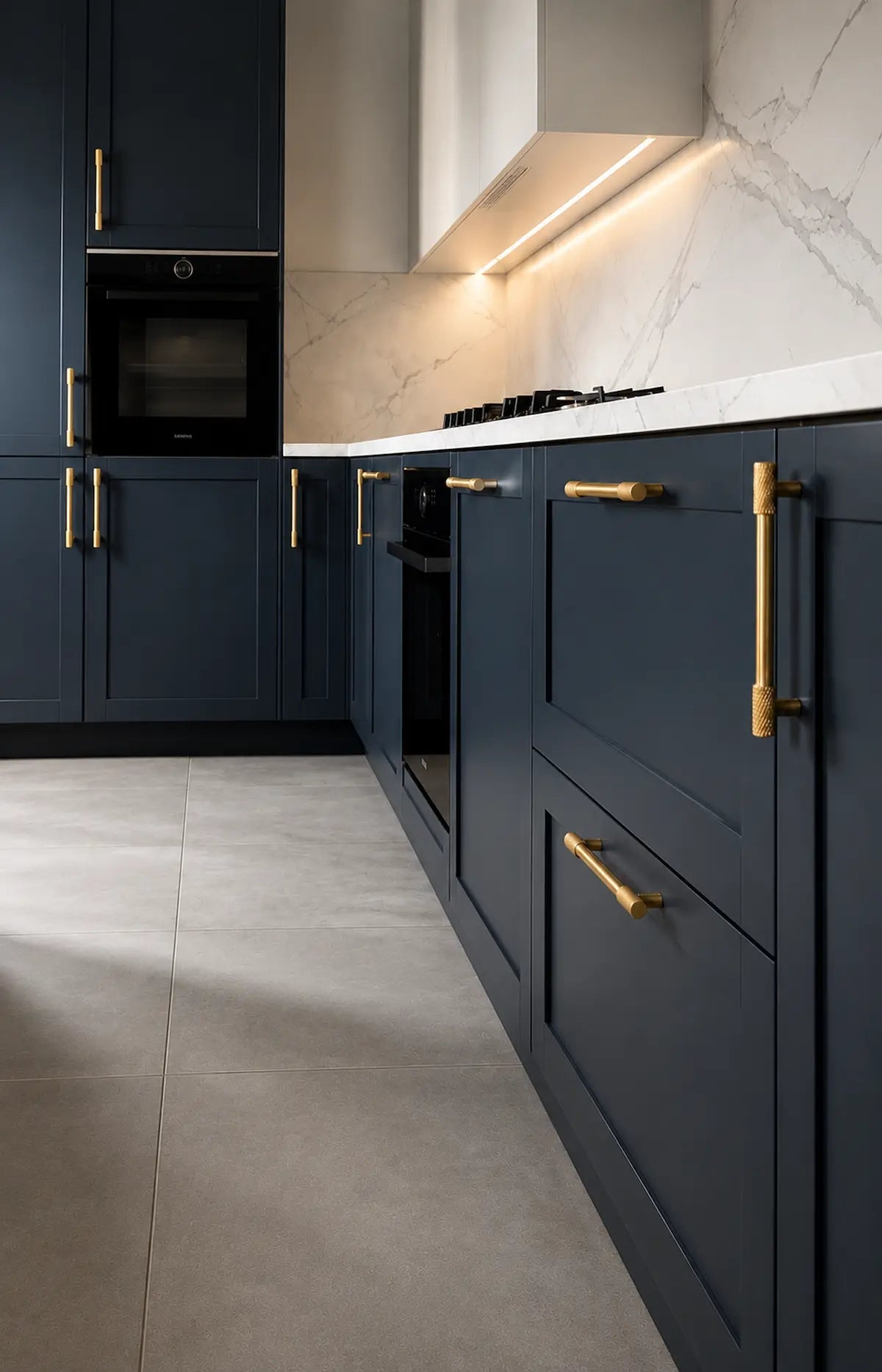
The most resolved interiors repeat a few material cues with restraint. Door handles do not need to be identical to cabinet pulls, but they should belong to the same family. A brushed brass lever can be paired with brass bar handles or knobs in the kitchen, then continued on wardrobe doors and bespoke joinery to create a subtle thread through the home.
This approach is particularly valuable in open-plan layouts, where the kitchen, living spaces and hallway are viewed together. Matching every item exactly can feel overly uniform, especially in a layered interior. Instead, use a common brass finish, a related silhouette or a shared natural material, then allow each application to respond to its scale. A long cabinet pull may suit deep drawers, while a smaller knob works better on a bedside table or bathroom vanity.
Hinges and door stops deserve the same attention. If they will remain visible, coordinate their finish with the handle rather than treating them as purely technical components. These smaller elements are often what separate a considered fit-out from one that feels assembled from unrelated parts.
Order samples before making a whole-home decision
Photography is useful, but brass, leather, timber and marble are material-led choices. Their colour and texture shift with natural light, wall paint, flooring and the other finishes around them. A sample placed beside a tile, timber veneer or benchtop provides a much more reliable read than an image viewed on a mobile.
Samples are especially helpful when deciding between warm and cooler brass expressions, or when working with natural materials whose grain and veining vary. View them in the rooms where they will be used: beside a north-facing window, under evening lighting and against the door colour. A finish that feels perfectly balanced in a bright kitchen may read quite differently in a moody hallway.
Allow for made-to-order timing as part of the specification process. For a full project, a two to three week lead time is sensible to build into the programme, rather than leaving hardware until the final days before handover. This is also the moment to count every opening, confirm handing where relevant and include all cabinet hardware, accessories and spare requirements in one coordinated order.
Care that respects the material
Solid brass door hardware does not need aggressive cleaning. In most cases, a soft, dry cloth is enough to remove everyday fingerprints and dust. Avoid abrasive pads, harsh chemical cleaners and polishes unless the care guidance for the selected finish specifically recommends them. These products can alter the surface and remove the intended character of the metal.
Natural timber, marble and leather should be treated with the same care given to other genuine materials in the home. Wipe spills promptly, avoid soaking the surface and expect small variations to be part of their appeal. Hardware is used daily, so signs of use are not necessarily flaws - they can be evidence of an honest material doing its job beautifully.
Before finalising the schedule, hold the chosen handle against the door sample, check its function for each room and consider the details people will touch every day. That brief pause usually leads to hardware that feels right not only on installation day, but years into living with it.
Leave a comment
All comments are moderated before being published.
This site is protected by hCaptcha and the hCaptcha Privacy Policy and Terms of Service apply.