
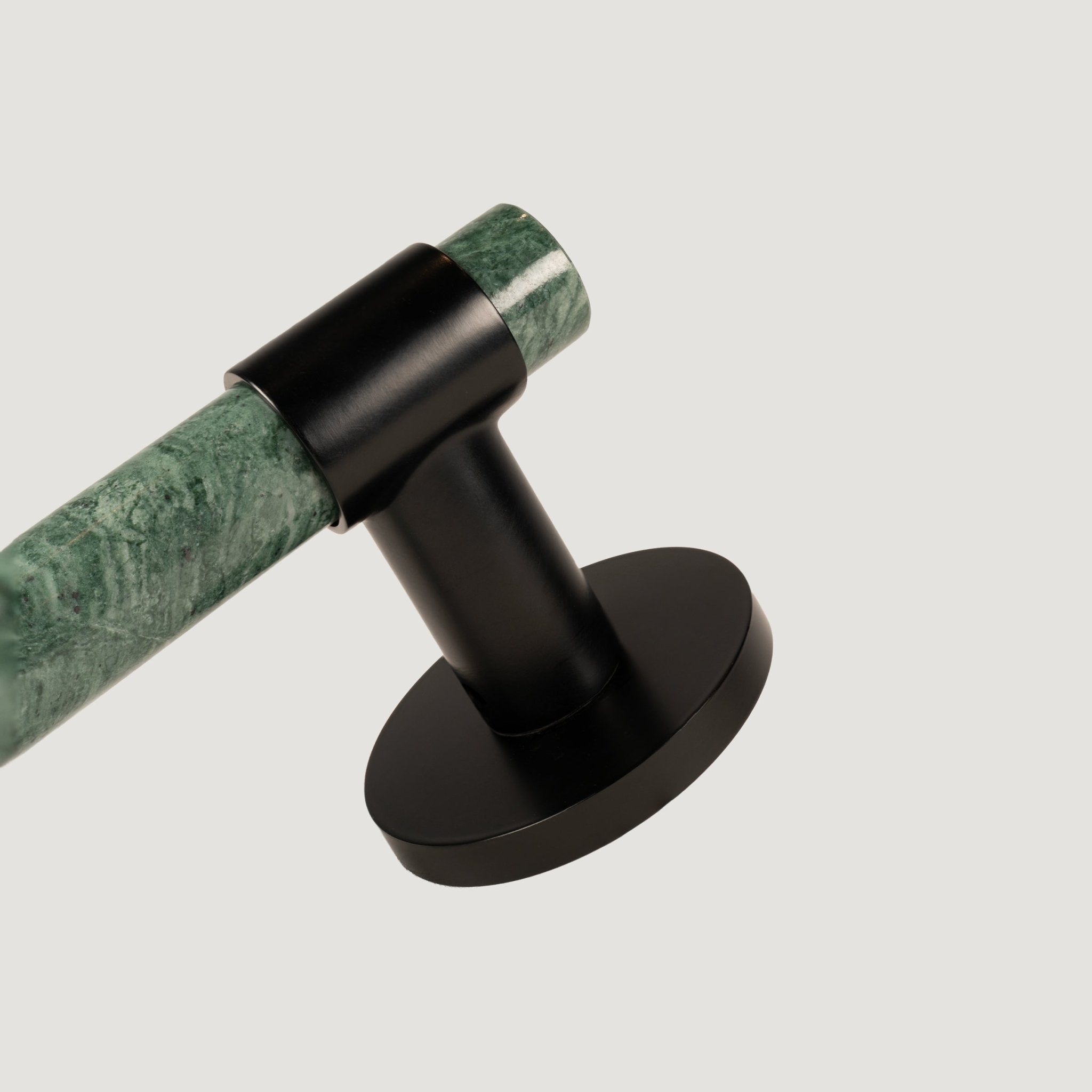
Marble Door Handles for Considered Interiors
Marble Door Handles: How to Choose Them and Where They Work Best
Marble door handles pair natural stone with solid brass, giving a door or drawer a cool, weighted feel that plated hardware cannot reproduce. They work best where touch and close viewing make the material noticeable: bedrooms, ensuites, powder rooms, dressing rooms and detailed joinery. Because marble is a natural stone, every piece varies in veining and tone, and it suits low to medium use areas better than the hardest-working parts of a kitchen.
This guide covers why the material changes a room, how to choose the right configuration, which finishes sit comfortably alongside it, and how to care for stone hardware once it is installed.
Why marble changes a room
Hardware sits at the intersection of architecture and touch. A door may be closed, a drawer pulled open or a wardrobe used in low morning light, yet the handle stays a constant point of contact. Choosing a genuine material for that contact point changes the perceived quality of the whole room.
Marble has a visual density that works particularly well against broad, quieter surfaces: warm white walls, stained oak joinery, limestone floors, crisp painted cabinetry. The stone introduces movement without a busy pattern, while brass adds a warm metallic edge that stops the composition feeling cold.
Unlike a printed or applied finish, natural marble is never identical from handle to handle. Fine veining may be pronounced on one piece and subdued on another, and the ground colour can move between pale, smoky and richly toned. For anyone who values honest materials, that variation is the point rather than a flaw.
There is a practical benefit too. Marble can bridge materials that might otherwise compete. In a bedroom with timber flooring, brass lighting and painted wardrobes, a stone and brass handle makes those elements read as intentional. In a bathroom, it can echo a vanity top or wall tile without requiring every surface to match.
Choose the configuration before the design
The most common specification mistake is selecting hardware from a close-up image without working out what the door actually needs to do.
Australian internal doors are usually 35mm thick with a 60mm backset, the distance from the door edge to the centre of the handle. Confirm both before ordering, along with latch compatibility and fixing positions, because custom doors and detailed joinery frequently vary. Our installation guide sets out the measurements to check, and the lock type guide explains each configuration in detail.
In short:
- Passage suits doors that need to latch but not lock, such as hallways and living spaces.
- Privacy suits bathrooms and bedrooms, with a turn on the inside.
- Entry suits external doors and rooms requiring keyed access.
- Dummy suits doors with no latch at all, including many wardrobe doors, cupboards and fixed decorative panels.
Scale matters alongside configuration. A generous lever suits tall doors, substantial panelling and larger circulation spaces. In a smaller guest room or narrow hallway, a more restrained form gives the marble room to speak without crowding the door.
Let the stone lead, then edit the metals
Marble is rarely neutral, even when it is pale. Its undertones should guide the metal finish. Warm cream and beige stones sit comfortably with brushed brass and softer gold tones. Charcoal, white and grey marbles can be sharpened with darker metalwork or calmed with satin brass, depending on the mood of the scheme.
There is no requirement to use one finish everywhere, but changes should have a reason. A powder room might use marble and brass to establish richness while bathrooms adopt the same brass with a different stone tone drawn from the tiles. What matters is that the metal language stays consistent enough to read as one project.
Look past the handle itself. Tapware, lighting, mirror frames, door stops and cabinet hinges all influence whether brass reads as deliberate or accidental. Exact matching is not necessary, and slight differences in sheen often feel more layered, but the undertones should sit comfortably together.
Solid brass is the structure behind the surface
A marble detail is only as convincing as the hardware supporting it. Door hardware needs internal strength, accurate machining and a weight that feels controlled rather than cumbersome. Solid brass provides that. It is dense, corrosion resistant and suited to the repeated use expected of doors, drawers and wardrobes.
The distinction matters when comparing premium hardware with mass-market alternatives. Hollow handles and plated substrates can look acceptable from a distance but lack the tactile density and long-term integrity of solid metal. A genuine stone element paired with solid brass is materially consistent: the finish is not pretending to be something it is not.
Where marble works best
Marble hardware is often associated with formal rooms, but it adapts well to a tailored Sydney apartment, a pared-back coastal house or a contemporary family renovation. The key is using it where touch and visual proximity make the material noticeable.
Bedrooms are the natural starting point. A marble lever on the bedroom door, repeated as a smaller knob on wardrobes or bedside cabinetry, creates a considered progression through the space.
Ensuites and bathrooms suit a complementary stone pull on the vanity, relating back to the bedroom without making the two rooms feel matched.
Powder rooms are one of the strongest applications. Because the space is small, a single marble knob on the vanity or a privacy set on the door creates a memorable point of difference. It is a chance to use an expressive material without committing it across the whole home.
Dressing rooms and bespoke joinery give marble the low to medium use it prefers, alongside enough close viewing to reward the detail.
Kitchens need editing. Marble reads beautifully on a bar cabinet, a butler's pantry door or an island end panel. It is less suited to heavy drawer banks and pull-out pantries, where constant use, grease and frequent cleaning make solid brass the more practical choice. If the kitchen already has heavily veined stone, fluted glass or ornate timber grain, repeating stone pattern at handle scale will make the joinery feel restless.
Coastal and high-use homes
Solid brass is corrosion resistant, which is why it has been used in marine settings for centuries, but salt air still accelerates finish wear on any metal. In coastal Sydney homes, wipe exterior and near-exterior hardware with a damp cloth regularly and dry it afterwards, particularly on doors exposed to sea spray or prevailing wind.
Marble deserves the same attention for a different reason. Natural stone is porous, so acidic liquids, harsh chemical cleaners and abrasive pads can mark the surface. Wipe with a soft, damp cloth, dry it, and avoid bathroom cleaners containing acid. Regular gentle cleaning is all that is normally needed.
For external doors in exposed positions, discuss configuration and placement with your builder or installer before committing. Hardware should be specified for its location and function, not its finish alone.
See the material before you commit
Daylight, wall colour and adjacent timber change how a stone reads considerably. If you would like to compare undertones, surface texture and brass finishes with your materials in your own light, contact us to ask about sample availability.
Bergamo hardware is made to order with a two to three week lead time per project, so bring hardware selection forward in the build programme and confirm quantities before installation is scheduled. A little coordination early prevents rushed substitutions late.
Marble door hardware is not meant to disappear into the background. It is a small, functional detail that rewards a closer look, becomes more familiar with use and gives an interior a finish that feels genuinely its own.
Frequently asked questions
Are marble door handles durable?
Yes, when specified for the right rooms. The brass structure carries the load and handles normal daily use. The marble is a natural stone, so it is porous and can mark if exposed to acidic or abrasive cleaners. Marble suits bedrooms, bathrooms, powder rooms, wardrobes and joinery better than the hardest-working kitchen drawers.
How do you clean marble hardware?
Wipe with a soft, damp cloth and dry afterwards. Avoid abrasive pads, acidic products and harsh chemical cleaners, which can mark the stone and affect the surrounding brass finish.
Will every marble handle look the same?
No. Veining, tone and pattern vary between pieces because the stone is natural. Handles from the same collection share a consistent character, but individual pieces differ. Ordering a sample is the best way to understand the range.
What backset do I need for a marble door lever?
Australian internal doors typically use a 60mm backset with a 35mm door thickness, but custom doors vary. Measure from the door edge to the centre of the handle position, and confirm door thickness and latch compatibility before ordering.
Can marble handles be used on external doors?
Entry configurations exist for keyed external access, but exposure matters. Salt air, direct weather and full sun are harder on any hardware. In coastal or exposed positions, discuss placement with your builder and plan for regular cleaning.
Read more
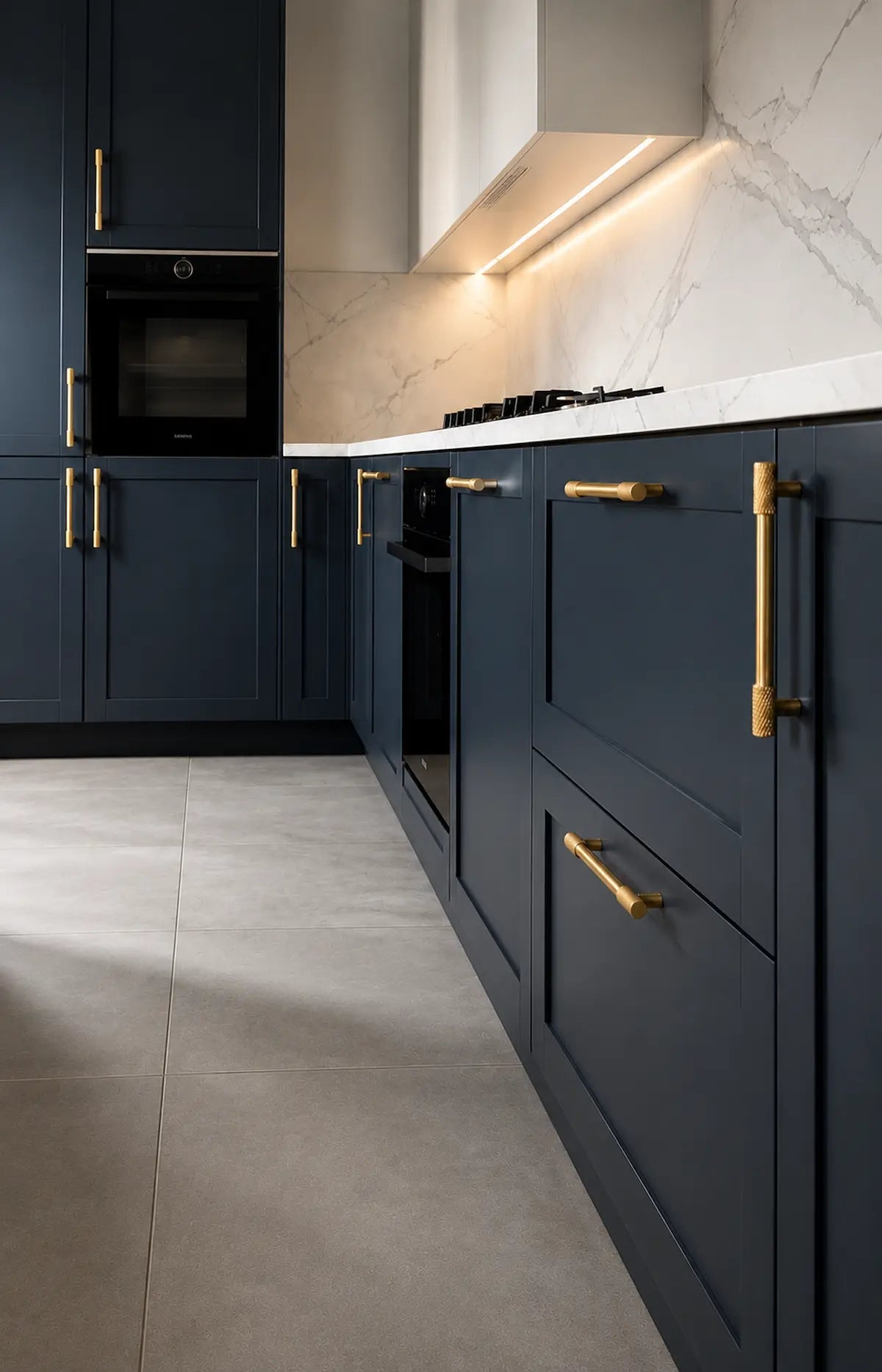
Choose cabinet handles that bring weight, warmth and cohesion to kitchens, wardrobes and bespoke joinery with materials made to be touched, every day.

Leather door handles bring warmth and tactile detail to interiors. Learn how to specify leather, solid brass and coordinated hardware with confidence at home.
Leave a comment
All comments are moderated before being published.
This site is protected by hCaptcha and the hCaptcha Privacy Policy and Terms of Service apply.