
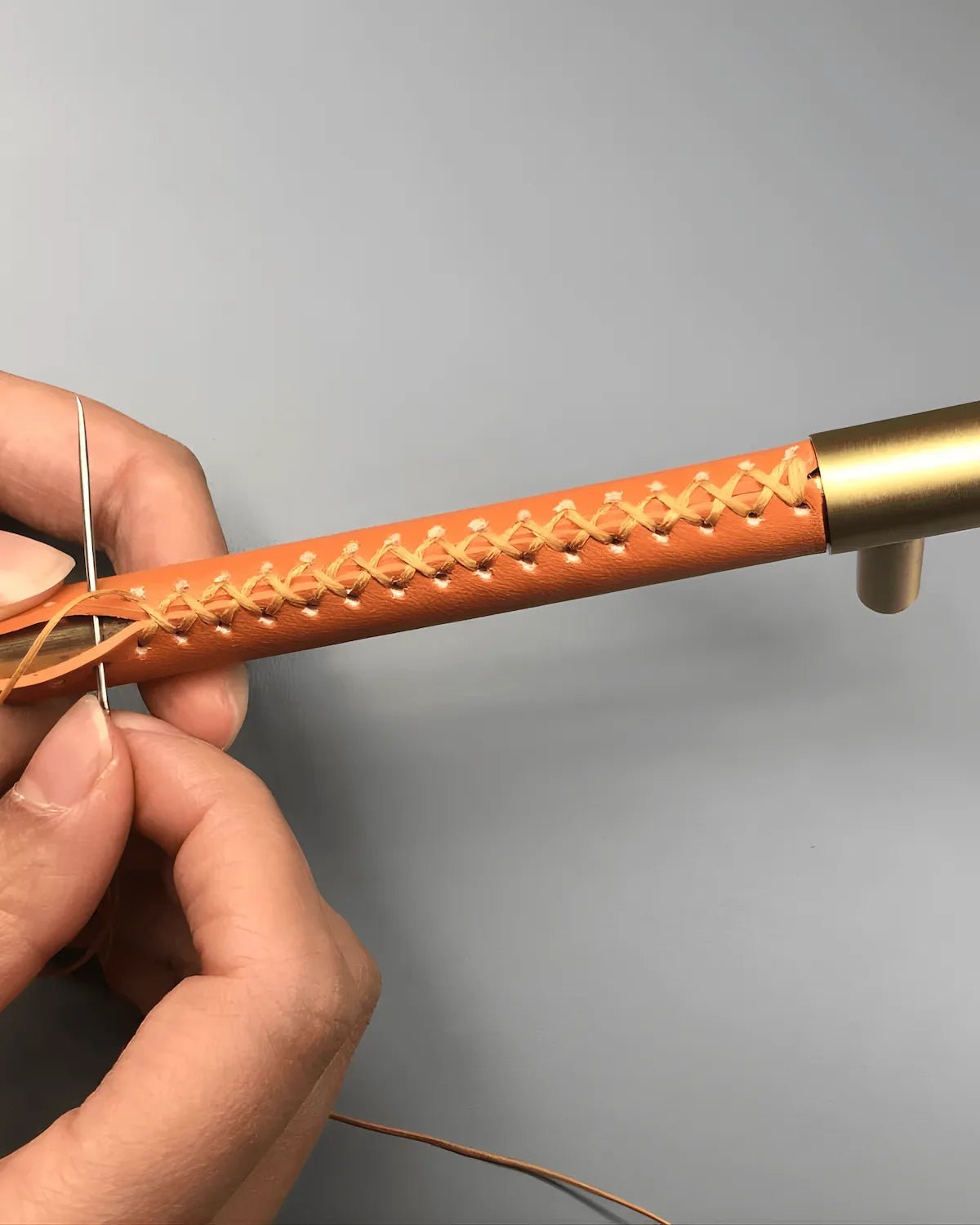
Leather Door Handles for Considered Interiors
Leather Door Handles: Where They Work, How They Wear and What to Specify
Leather door handles wrap premium leather around a solid brass core, giving a lever a warmer, more yielding feel than bare metal. They suit bedrooms, dressing rooms, wardrobes, studies and well-ventilated powder rooms, where use is moderate and the material is noticed at close range. Leather does mark and mellow with handling, so it rewards households that want a finish with character rather than one that stays visually unchanged.
This guide covers where leather belongs, how it wears in practice, what to pair it with, and the measurements to confirm before ordering.
Why leather belongs on door hardware
Premium leather has an immediate visual warmth that plated metal cannot imitate. Its grain, tone and slight natural variation create a quiet contrast against refined metalwork. On a door lever it also changes the hand feel: leather is less cold than exposed metal and offers a more yielding point of contact.
That does not make it a casual material. Applied to a properly weighted solid brass handle, leather reads as considered and architectural. The brass provides structure, longevity and a substantial base. The leather provides texture. Together they suit interiors where every finish has been chosen to relate to the next, from bronze-toned tapware and timber veneer to limestone flooring and tailored upholstery.
Leather is most compelling in homes that want warmth without rusticity. Dark leather with brushed brass sits beautifully against walnut joinery. Lighter leather brings softness to pale oak, travertine and off-white cabinetry. Explore the full range of leather door and cabinet hardware to see how the material performs across finishes. The material has presence without needing to dominate.
How leather wears, honestly
This is the question worth answering before any other.
Leather changes with use. The areas your fingers reach most will darken and soften first, and the surface will pick up small marks over time. On a bedroom or dressing room door, that is the appeal: the handle looks handled, and it settles into the room rather than staying showroom-new.
In harder settings it becomes a liability rather than a feature. Front doors take direct sun and weather. Kitchens involve grease, moisture and constant cleaning. Laundries and mudrooms are gripped with wet hands. Bathrooms adjacent to showers stay humid. In all of those, a fully solid brass handle is the more sensible choice, and it will still coordinate with leather used elsewhere in the house.
The honest summary is that leather is a low to medium use material. Specify it where that is true and it ages well. Specify it in a busy family kitchen and you will be disappointed.
Choosing by configuration
The right specification starts with what the door needs to do:
- Passage for internal doors that latch but do not lock, such as hallways and living areas.
- Privacy for bedrooms and bathrooms, with a turn on the inside.
- Entry for external doors and rooms needing keyed access.
- Thumb turn where a simple turn-to-lock is enough.
- Dummy for non-latching doors, including fixed wardrobe panels and the inactive leaf of a double door.
Australian internal doors are usually 35mm thick with a 60mm backset, the distance from the door edge to the centre of the handle. Confirm both before ordering, along with handing, latch compatibility and fixing positions, because solid-core and custom doors frequently vary. The installation guide sets out what to measure.
Choosing one design across these functions is what gives a home continuity. The lever appears on bedroom and dressing room doors, then carries into joinery through matching pulls and knobs.
Consider the scale of the door
A leather-wrapped lever can be an elegant detail on a standard internal door, but it should still feel proportionate. Taller, heavier solid-core doors benefit from a more generous backplate or a stronger brass presence. On compact linen cupboards and small joinery, a smaller pull or knob echoes the leather detail without making the elevation busy.
Assess hardware alongside the door profile, architrave, floor finish and nearby cabinetry. A handle can look modest in a photograph and become a focal point against a flat-panel door, or disappear entirely against richly veined stone and heavily grained timber.
Pairing leather with brass, timber and stone
Leather has a natural affinity with solid brass. Brass finishes range from bright and polished to brushed, aged and darker in tone, and each changes the character of the leather beside it. A brushed brass base feels quietly contemporary. A warmer or aged brass makes the same leather read as more traditional, particularly with panelled doors and classic joinery.
With timber, aim for a relationship rather than an exact match. Dark brown leather and walnut create a layered, tonal look where the undertones are compatible. Pale timber benefits from the definition of darker leather, especially in minimalist wardrobes and dressing rooms with few other contrasting details. Where the timber has pronounced grain, choose leather with enough depth to hold its own without competing.
Stone is a useful counterpoint. Leather softens marble, quartzite and polished plaster, while the brass introduces a fine line of reflection. This works particularly well in bedrooms, dressing rooms and powder rooms, where hard surfaces can otherwise feel visually cool. It makes a room feel more human at the points where people touch it most.
The Cavallo Collection is built around this material conversation, pairing premium leather with solid brass across door hardware and cabinet hardware.
A coordinated approach to doors and joinery
A home rarely contains doors alone. Wardrobes, vanities, dressing room joinery and built-in cabinetry all need resolving. Repeating the same leather and brass language across them creates a stronger result than a feature handle on one door and unrelated hardware elsewhere.
Coordination does not mean every piece is identical. A door lever pairs with a cabinet pull in the same leather and brass, while smaller knobs handle bedside drawers and upper cabinetry. The shared palette keeps the project coherent while the change in form responds to function and scale.
This matters most in open-plan homes, where a dressing room flows from a bedroom with a bathroom beyond, or hallway doors are visible from living areas. When hardware is considered across those sightlines, the interior feels resolved before furniture and art are added.
Where a scheme mixes materials, a common approach is leather on bedroom and dressing room doors, with solid brass in the kitchen, laundry and entry. The brass finish carries through, so the house still reads as one project.
Caring for leather
Care is straightforward. Wipe dust away with a soft, dry cloth, and address marks promptly with a lightly damp cloth. Avoid abrasive cleaners, harsh chemicals, solvents and saturating the leather with water, all of which can strip the finish, alter the colour or leave it patchy.
Before committing to a full project, contact us to ask about sample availability. Sydney afternoon light pulls far more warmth from leather and brass than a cool morning interior, and that difference often decides the specification.
Planning a made-to-order project
Detailed hardware should be selected before joinery and doors reach final installation. Bergamo pieces are made to order with a two to three week lead time per project, so leave room in the programme for production, delivery and fitting rather than substituting something readily available at the last stage.
For renovations, have the installer confirm all measurements before the order is placed. For new builds, align the hardware schedule with the door supplier, cabinetmaker and builder so drilling, backsets and door preparation are resolved before site pressure builds. Set out the full schedule first: entry, passage, privacy, thumb turn, dummy and cabinet hardware can then be specified in one design language.
Designers, builders and joiners working across multiple projects can find account details on our contact page.
The most persuasive finish is often the one you notice with your hand before your eye. Choose leather hardware that feels right in the palm, sits confidently beside the surrounding materials, and will become more familiar with every use.
Frequently asked questions
Do leather door handles wear out?
They change rather than fail. The brass structure carries the mechanical load and lasts. The leather darkens and softens where hands touch it most, and picks up marks over time. In low to medium use rooms that reads as patina. In kitchens, laundries and entry doors, solid brass is the better choice.
Can leather door handles be used in bathrooms?
In a well-ventilated bathroom or powder room, yes, provided the handle is not positioned where it takes regular direct water. A compact, poorly ventilated bathroom or a door immediately adjacent to a shower is better served by solid brass.
How do you clean leather hardware?
Dust with a soft, dry cloth and lift marks with a lightly damp one. Avoid solvents, abrasive cleaners, harsh chemicals and soaking the leather.
What backset do I need for a leather door lever?
Australian internal doors typically use a 60mm backset with a 35mm door thickness, but solid-core and custom doors vary. Measure from the door edge to the centre of the handle position and confirm door thickness, handing and latch compatibility before ordering.
Can I mix leather and solid brass hardware in one home?
Yes, and it is often the best approach. Use leather in bedrooms, dressing rooms and studies, and solid brass in the kitchen, laundry and entry. Keeping the same brass finish across both means the house still reads as a single scheme.
Read more
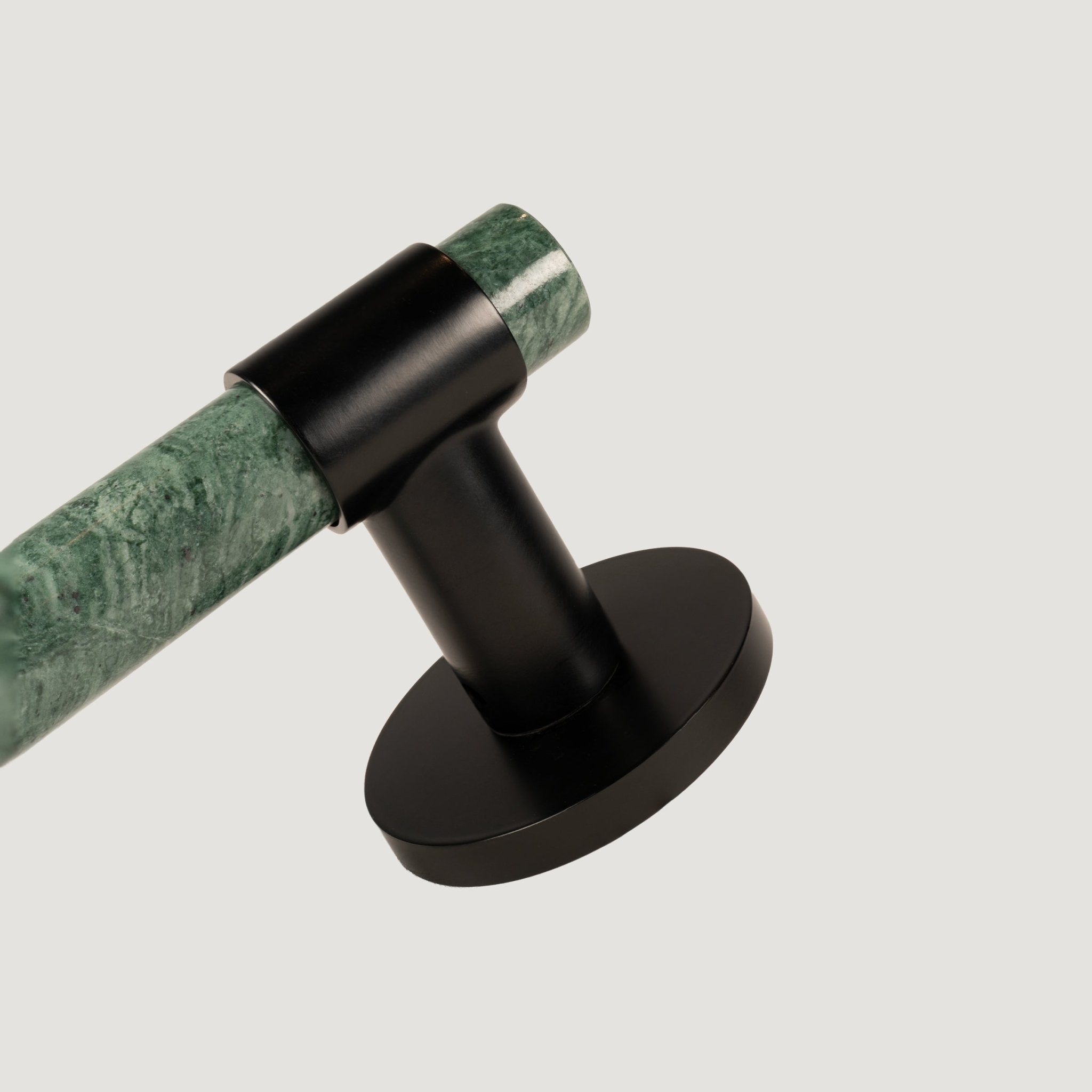
Choose marble door handles with confidence. See how natural stone, solid brass and careful placement add depth to refined Australian residential interiors.
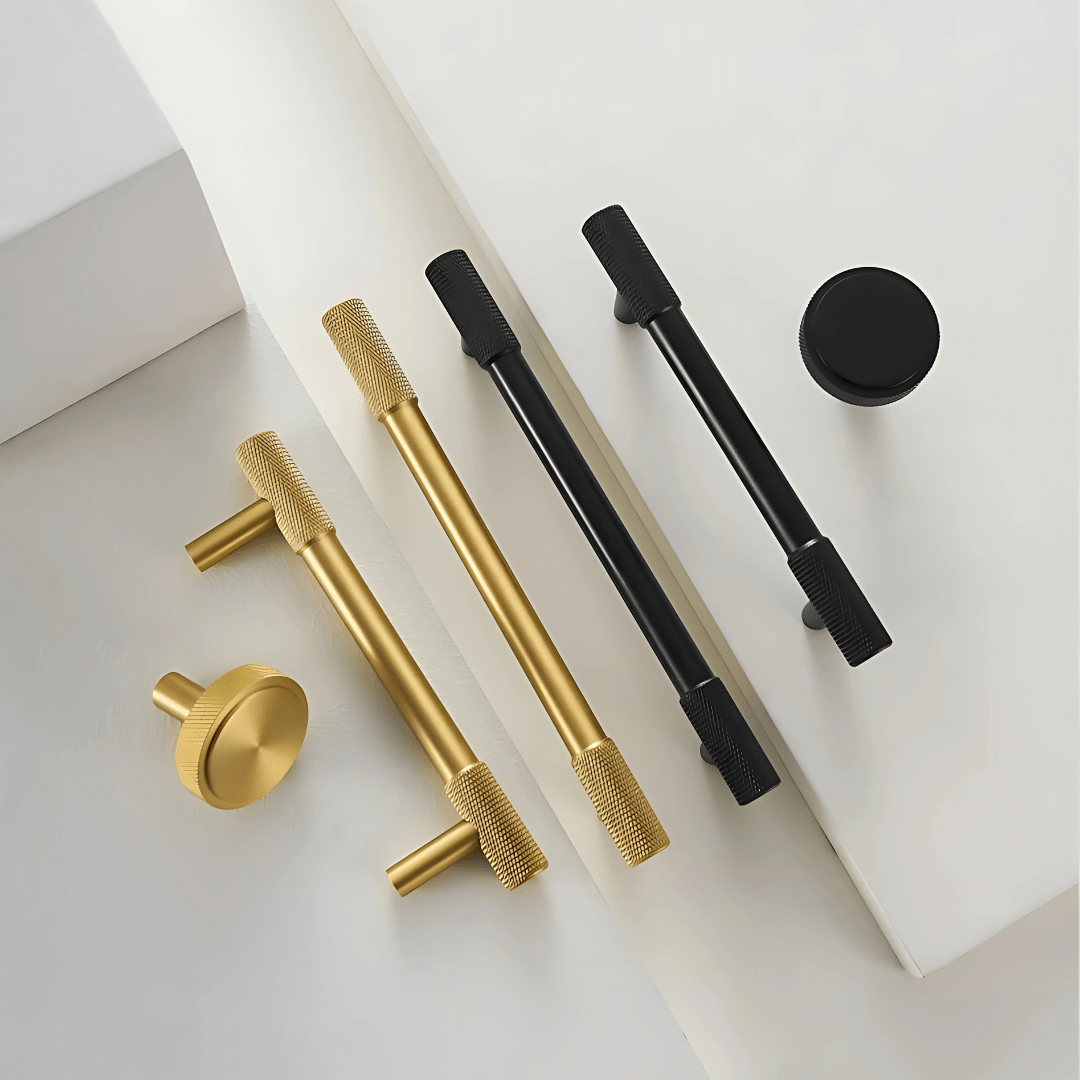
Choose kitchen bar handles by length, hole centres, projection and placement, with practical sizing guidance for drawers, pantry doors and custom joinery.
Leave a comment
All comments are moderated before being published.
This site is protected by hCaptcha and the hCaptcha Privacy Policy and Terms of Service apply.