
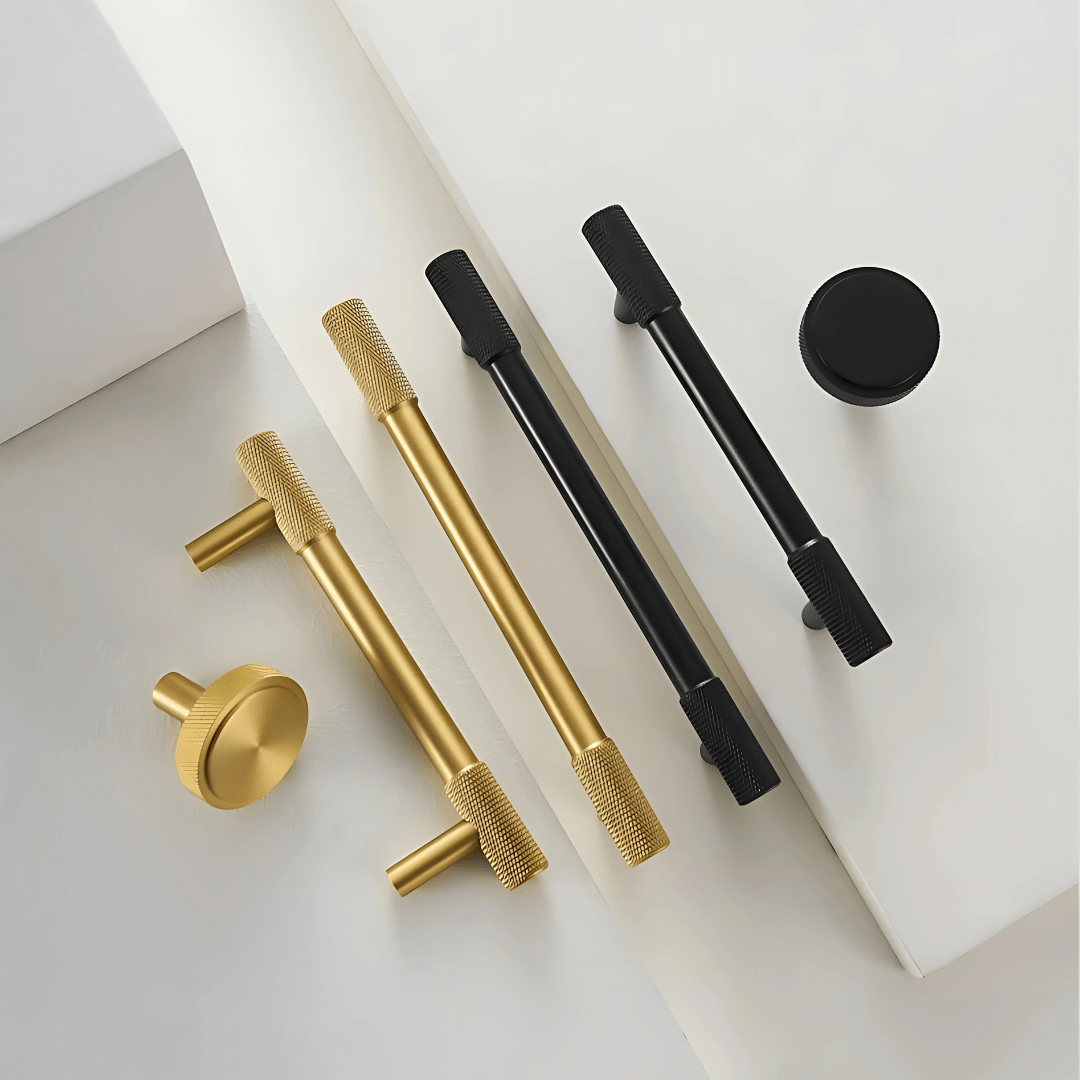
Kitchen Bar Handles That Finish Joinery Beautifully
Kitchen Bar Handles: Length, Projection and Placement
A bar handle should measure roughly one third of the drawer front it is fitted to, sit 20mm to 30mm off the cabinet face so fingers can get behind it, and be mounted at a consistent height across every run of joinery. Handles are sold by hole centres, the distance between the two fixing holes, which is always shorter than the handle itself. Standard centres in Australia are 96mm, 128mm, 160mm, 192mm, 256mm and 320mm, with appliance pulls running to 448mm and beyond.
This guide covers how to size bar handles, when to use two instead of one, how vertical pulls differ from horizontal, and what to resolve with the cabinetmaker before anything is drilled.
Sizing bar handles
Bar handles bring a clear linear rhythm to kitchen cabinetry. Their horizontal form makes a compact kitchen read wider, and their repeated lines introduce order across a large bank of drawers.
Work out the overall handle length first, at about one third of the drawer width, then choose the hole centres that fit it. A 400mm drawer generally lands on 128mm centres. A 600mm drawer lands on 160mm or 192mm. An 800mm to 900mm drawer moves up to 256mm or 320mm.
Past about 900mm, two pulls placed symmetrically are usually the better answer. They balance the load and stop a wide front racking when it is pulled from one end. A single long pull remains an option where a minimal, unbroken line matters more than mechanics, but it is the exception.
A handle that is too short looks incidental on wide joinery. Running a pull almost the full width of a drawer is a deliberate choice rather than a safe default: it reads as one continuous horizontal line, and it only works if the whole run follows the same approach.
Vertical pulls on tall doors
For full-height pantry doors and integrated fridge cabinetry, vertical bar handles make a stronger architectural gesture and give a practical full-hand grip. These are usually appliance pulls, which run longer than standard drawer hardware.
The trade-off is visual weight. A pull that is too long or too thick will dominate a narrow door, while an underscaled one makes tall joinery look tentative. Aim to align vertical handles with the top of the adjacent drawer bank rather than centring them on the door, which almost always looks more resolved.
Position pulls on the stile opposite the hinge, roughly 50mm to 75mm in from the edge.
Projection and clearance
Projection is how far the handle sits proud of the cabinet face. Allow 20mm to 30mm of clear space between the back of the bar and the cabinet front so a hand can get behind it comfortably. Less than that and the handle is awkward to use on a heavy pan drawer.
Deeper handles feel generous on a large island or dark timber joinery, but they catch clothing in a tight galley and can crowd cabinetry that already has deep shaker rails. Before signing off, picture a hand reaching into the pull, a hip passing a peninsula corner and a dishwasher door opening beside adjacent cabinetry.
Match the profile to the cabinetry
The shape of a bar handle should respond to the cabinet style rather than compete with it.
Clean slab doors can carry a more sculptural pull, because the joinery provides a calm field around it. Fine cylindrical forms suit kitchens meant to feel light and contemporary. A broader or faceted profile adds presence to a monolithic island.
Shaker and framed cabinetry need restraint. A simple refined metal bar lets the door profile stay legible, while an elaborate handle crowds the composition. On timber veneer the decision follows grain direction: long horizontal pulls reinforce the linearity of a wide grain, while shorter pulls let expressive timber remain the focus.
Where the joinery calls for something smaller, knobs suit drawer fronts up to about 450mm and cupboard doors, and can sit alongside bar handles in the same finish.
Consistency without uniformity
Not every handle needs to be the same length. A considered scheme might use one length on doors, another on standard drawers and a longer version on wide drawers and appliances.
What should stay consistent is the design family, the projection, the finish and the installation height. That continuity is what lets varied sizes read as intentional rather than accidental.
Centred pulls read formal and symmetrical. Handles positioned towards the top of drawer fronts and at the opening edge of doors feel more contemporary and are easier to use. Whichever you choose, align handle centres carefully across adjoining drawer stacks. A few millimetres of inconsistency is surprisingly visible once the hardware is installed.
Material and finish
Solid brass has a density that plated, hollow hardware cannot replicate. It feels assured in the hand and holds crisp detailing under the grease, moisture and frequent cleaning a kitchen puts it through. Brushed finishes disguise daily marks more readily than polished ones, which is worth weighing in a busy family kitchen.
Brushed brass tempers cool white cabinetry and adds warmth beside honed stone. A darker finish grounds pale oak and limestone. A lighter metal sharpens the profile of charcoal, ink or deep green joinery.
Natural materials work best as accents in a kitchen rather than across every front. Marble or timber detailing suits a bar cabinet, a butler's pantry door or an island end panel, where use is lighter and the material is seen at close range. On heavy pan drawers and pull-out pantries, solid brass is the more practical choice.
A brass handle does not need to match every other brass element exactly, and a room can feel flat when every metallic surface is identical. The more useful question is whether the undertones belong together. If you are mixing finishes, repeat each one at least twice in the room or nearby spaces so it reads as a deliberate palette.
Browse the full range of cabinet hardware, or see how the same finishes carry through to door hardware in the rest of the house.
Plan before the cabinetry is drilled
The cleanest hardware decisions are made before joinery goes into production. Cabinetmakers need confirmed hole centres, handle lengths and fixing details so every front can be drilled accurately. Changing the selection after painting or veneer finishing leaves unwanted holes, patches and compromised alignment.
Prepare an elevation showing each cabinet front, drawer width and handle orientation. Mark whether a wide drawer takes one long pull or two, then check that vertical handles on tall doors align with nearby appliance handles. This exercise routinely surfaces awkward junctions before they become site changes.
If you are replacing existing hardware, measure the current fixing centres rather than the length of the old handle. The two are never the same.
Ask us about sample availability before committing. A finish looks completely different beside your actual stone and paint than it does on a screen. View them in morning and evening light, hold them against tapware and appliance trims, and check the weight in your hand.
Bergamo hardware is made to order with a two to three week lead time per project. Build that into the joinery programme rather than treating handles as a final-week purchase.
Caring for kitchen hardware
Use a soft damp cloth for regular cleaning and dry the hardware afterwards. Avoid abrasive pads, harsh chemical sprays and limescale removers, which can alter a finish over time. Where natural materials are used as accents, keep them clear of prolonged moisture and wipe spills promptly.
A well-chosen bar handle should not merely fill a fixing position. It should make opening a drawer feel as considered as looking at the kitchen itself.
Frequently asked questions
What length bar handle do I need for a kitchen drawer? Aim for an overall length of roughly one third of the drawer width, then pick the matching hole centres. A 400mm drawer suits 128mm centres, a 600mm drawer suits 160mm or 192mm, and an 800mm to 900mm drawer suits 256mm or 320mm.
When should I use two handles on one drawer? Generally past 900mm. Two pulls balance the load and stop a wide front racking when pulled from one end. Below that, a single pull is usually cleaner.
How much clearance should a bar handle have? Allow 20mm to 30mm between the back of the handle and the cabinet face. Less makes a heavy pan drawer awkward to open, more starts to catch clothing in tight kitchens.
Should kitchen handles match the door hardware in the rest of the house? They do not need to be identical, but they should share a finish and design language. In open-plan homes the kitchen is often visible from hallway doors, so unrelated hardware makes expensive joinery look less integrated.
What are standard cabinet handle hole centres in Australia? 96mm, 128mm, 160mm, 192mm, 256mm and 320mm, measured centre to centre between the fixing holes. Appliance pulls for integrated fridges and full-height pantries run to 448mm and beyond.
Read more
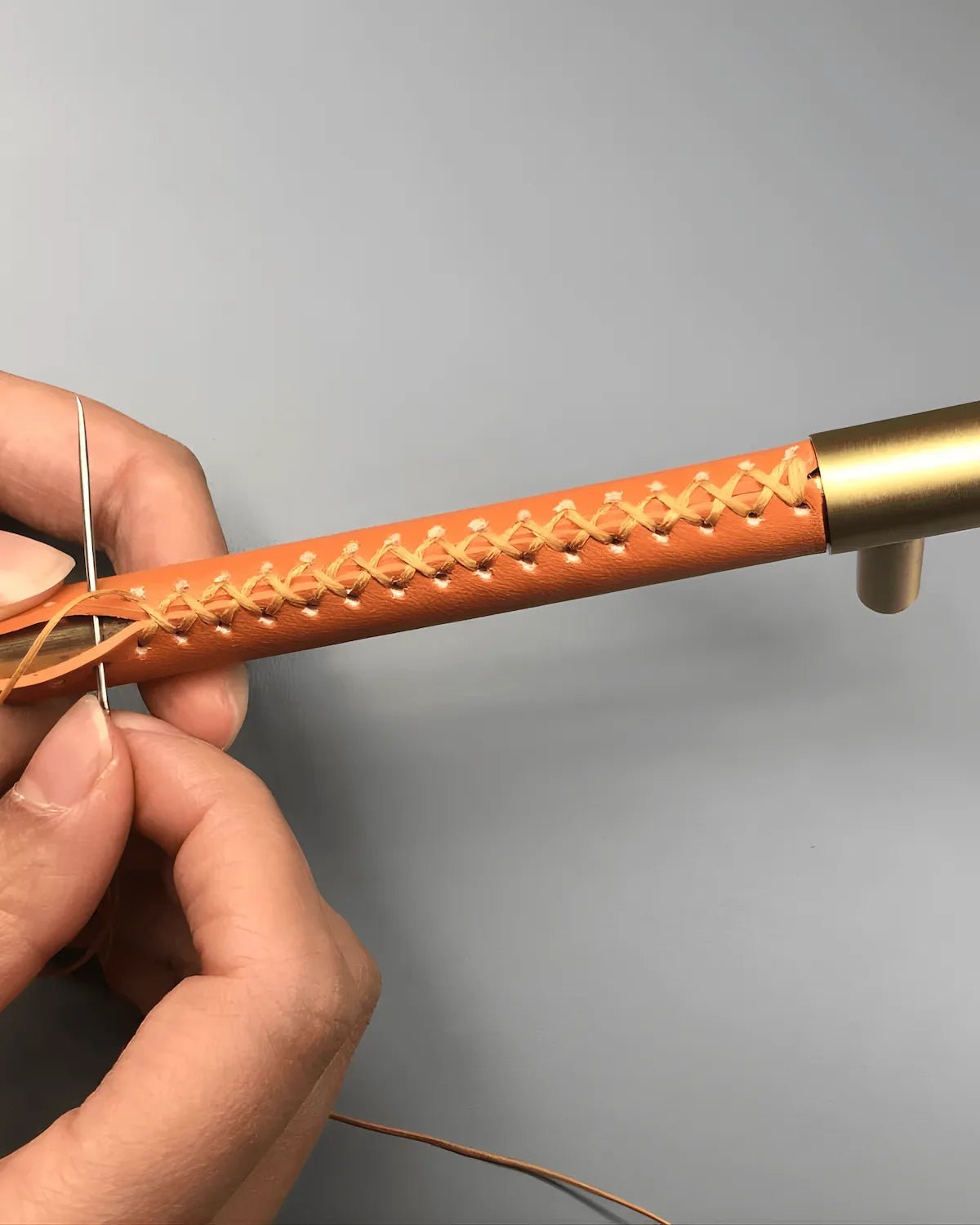
Leather door handles bring warmth and tactile detail to interiors. Learn how to specify leather, solid brass and coordinated hardware with confidence at home.
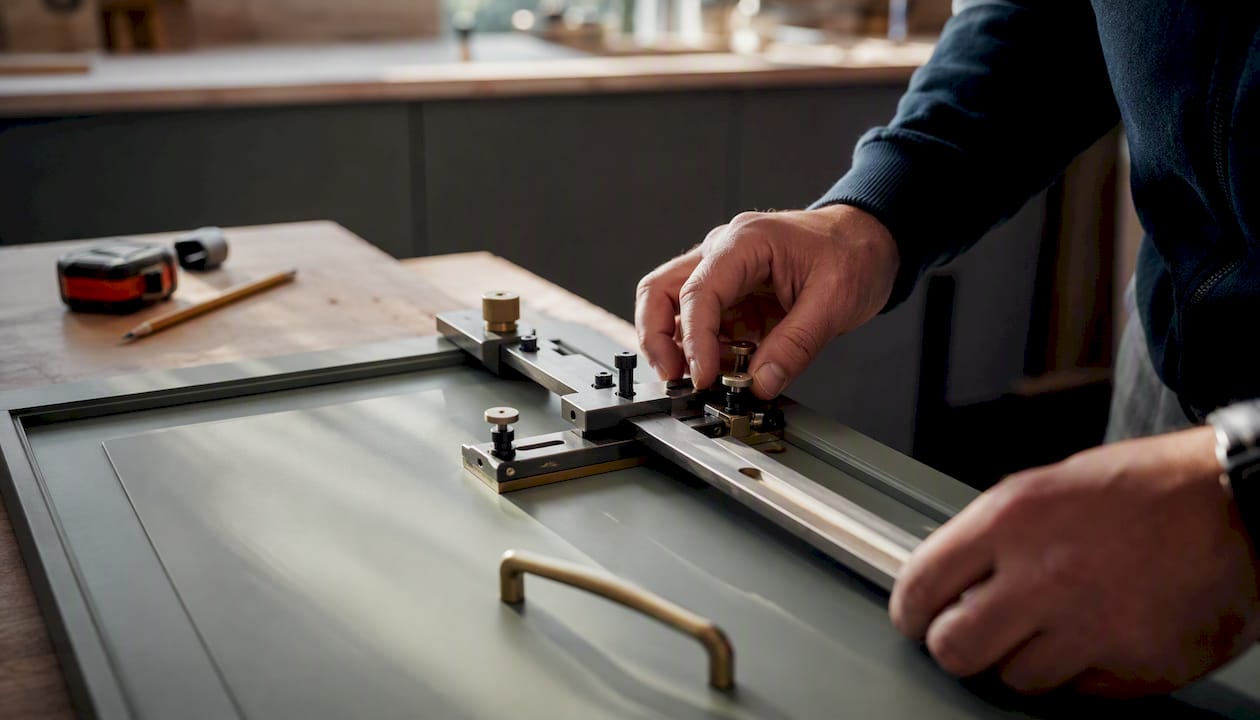
Plan cabinet knobs and pulls with a repeatable layout, sensible proportions and accurate drilling. A practical guide for kitchens, wardrobes and custom joinery.
Leave a comment
All comments are moderated before being published.
This site is protected by hCaptcha and the hCaptcha Privacy Policy and Terms of Service apply.