
Door hardware parts: how to identify and order the right replacement
Door Hardware Parts: How to Identify and Replace the Right Component
Most failed hardware orders come down to the same thing. Someone photographs a worn lever, describes it as "the silver handle thing," and receives a part that doesn't fit. The cure is unglamorous: name the component correctly, take four measurements, and send both to your supplier.
This guide covers what each part is called, how to measure it, and where replacements commonly go wrong.
The parts, and what each one does
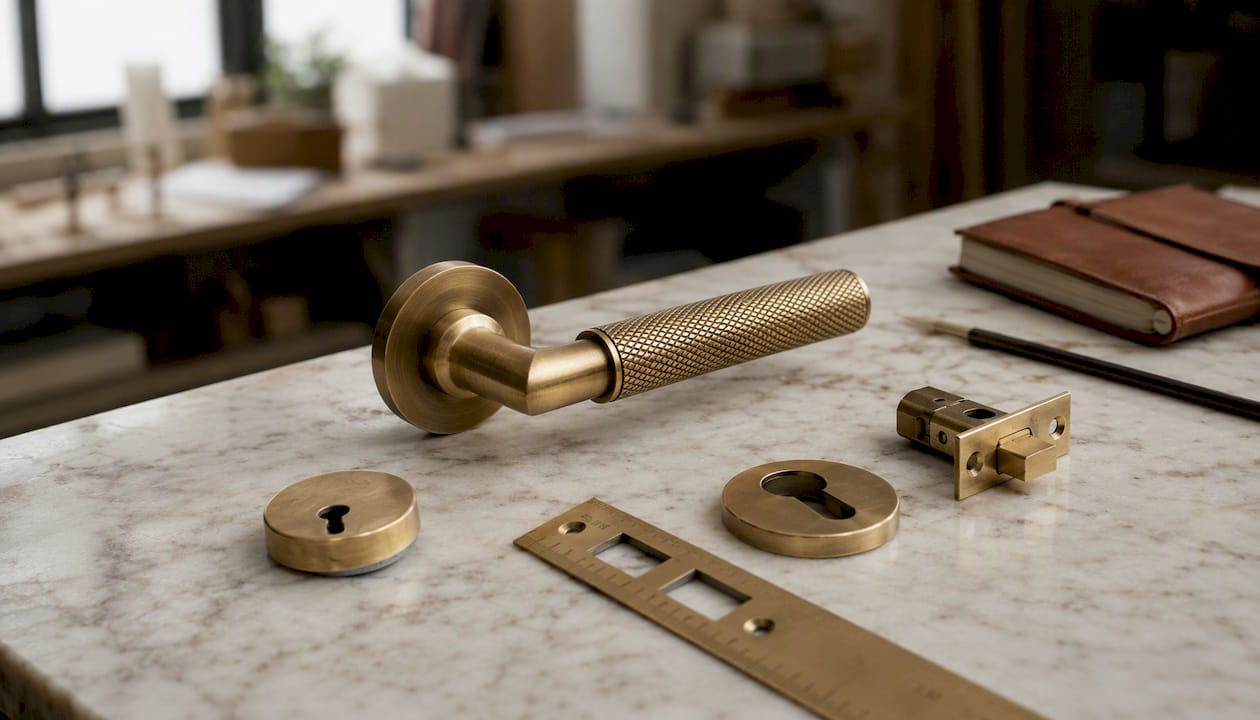
Handles, levers and knobs. The part you grip. Levers dominate modern Australian builds. Door knobs are more common on heritage homes and are returning in contemporary interiors.
Rosettes, backplates and escutcheons. The plate the handle sits on, covering the spindle and fixings. An escutcheon specifically covers a keyhole or cylinder.
Spindles. The bar connecting both handles through the door. Turning the lever rotates the spindle, which drives the latch.
Tubular latches. A spring-loaded bolt in a cylindrical case. The most common latch in Australian doors, internal and external.
Mortice locks. A rectangular lock body recessed into the door edge, usually combining latch and deadbolt. Common on older external doors.
Deadbolts. A solid bolt that doesn't self-retract, operated by key or thumb turn.
Strike plates and strike boxes. The plate on the jamb that the latch engages. A strike box adds a cavity to receive a deadbolt's longer throw.
Hinges. Butt hinges are standard. Pivot and concealed hinges suit flush contemporary doors.
Door closers. Spring or hydraulic mechanisms that pull a door shut. Standard on fire doors and commercial entries.
Door stops. Fixed or spring-loaded, preventing the door or handle striking a wall. Bergamo's door stops are solid brass rather than plated steel.
Thresholds and weather seals. Strips at the base of external doors blocking draughts, water and pests.
Cylinders. The keyed core inside a lock, often replaceable on its own without changing the lockset.
Faceplates. The metal strip on the door edge, usually stamped with a model number. This number is the fastest route to a correct replacement.
Snibs and turns. The internal lever on privacy sets that locks without a key.
Cavity and flush pulls. Pull-only hardware for sliding and pocket doors where a protruding handle isn't possible.
Identifying what you have
Work through these in order.
1. Photograph it properly. Three shots: the faceplate square on, the door edge with the latch extended, and the back plate showing screw positions. Natural light, no flash.
2. Determine the handing. Stand on the side the door opens away from you. Hinges on your left means a left-hand door. Some latches reverse; many sprung levers and locks don't.
3. Measure door thickness at the lock stile. Australian internal doors typically run 35mm to 40mm, externals 40mm to 45mm. Measure your own rather than assuming.
4. Record the backset. From the door's leading edge to the centre of the spindle hole. 60mm and 70mm are the common Australian sizes.
5. Check the spindle. Most Australian levers use an 8mm square spindle. Older and imported hardware may use splined or round profiles that look similar but won't engage.
6. Note the hole centres. The distance between the spindle hole and any secondary fixing holes.
7. Find the stamped model number. On the faceplate, if there is one. This single detail saves more back-and-forth than everything else combined.
Write the measurements directly onto the photos using your phone's markup tool. They travel with the image and can't get separated from it.
Five traps worth knowing
Mortice versus tubular. A mortice lock is a rectangular body recessed into the edge. A tubular latch is a round-cased spring bolt. The cut-outs are entirely different shapes and the two are not interchangeable.
Spindle profile. Square is the Australian standard, but splined and round profiles exist. A lever that looks identical can simply fail to engage.
Wrong backset. A 60mm latch in a door cut for 70mm either won't reach the strike or sits proud of the faceplate.
Handing. Some levers and locks are handed and won't operate correctly on the wrong swing.
Cylinder profile. Euro, oval and rim cylinders have different faceplate cut-outs and can't be swapped without changing the surrounding hardware.
Material matters more than it looks
The clearest long-term difference in door hardware is solid brass versus plated steel.
A plated finish is a thin coating over a base metal. At high-touch points, thumb turns, lever grips, the edges of a rosette, that coating wears through, and once it does the only fix is replacement. Solid brass wears differently. It develops a patina, and it can be re-polished rather than thrown out.
This matters most outdoors and in coastal properties, where salt air accelerates corrosion on any exposed base metal.
Every piece in Bergamo's door handle range is machined from solid brass rather than plated, which is why matching an existing set years later is realistic rather than approximate.
What you can fit yourself
Reasonable DIY jobs:
- Replacing a tubular latch and lever set on an internal door (15 to 45 minutes)
- Swapping a worn strike plate for the same size
- Fitting a door stop or privacy snib
- Replacing weather seals or a threshold strip
Jobs for a professional:
- Anything on a fire-rated door
- Multi-point locking kits requiring precise frame alignment
- Rekeying or replacing a security cylinder
- Doors where the frame has shifted and the bolt won't engage cleanly
A mortice lock replacement runs closer to one to three hours, particularly if the new unit needs chiselling to seat.
The fire door point isn't caution for its own sake. Fire doors are certified as complete assemblies, hardware included. Fitting non-compliant hardware can compromise that certification even if the door looks and closes normally, which becomes a problem at handover or resale.
Standards worth knowing about
Two Australian standards come up in this category.
AS 4145 covers locksets and door hardware, setting out terminology and testing for durability and security. Where security ratings or insurance requirements apply, ask a supplier directly whether a product has been tested to it.
AS 1428 governs accessibility, including handle height and the force required to operate a door. It applies to public buildings and to residential work subject to accessibility requirements. It does not apply to most ordinary domestic replacements.
For a standard bedroom or hallway lever swap in an existing home, neither standard imposes an obligation on you. They matter for fire doors, commercial work, and builds subject to accessibility provisions. If you're unsure whether your project falls into one of those categories, ask your builder or certifier rather than guessing.
Maintenance
Good hardware lasts decades. Most failures are predictable.
- Lubricate latch and bolt pivots once or twice a year with a proper lock lubricant, not household oil, which attracts grit
- Tighten set screws on handles and rosettes periodically. Loose screws cause almost every wobbly lever
- Clean solid brass with a soft cloth and mild soap. Harsh chemicals strip the patina
- Check hinge pins for wear. A sagging door is usually a hinge problem, not a latch problem
- Replace worn strike plates before the door starts rattling
Common faults, and what actually fixes them:
Sticky latch. Check for paint build-up or debris in the bore, then lubricate. If the bolt is corroded, replace the latch.
Loose lever. Tighten the set screw. If the spindle is rounded or worn, replace the spindle, not the lever.
Draught under the door. Weather seals compress permanently after a few years. They need replacing rather than adjusting.
Ordering a replacement
Give a supplier everything at once:
- The exact part name
- Photos: faceplate square on, door edge with latch extended, back plate with screws visible
- All measurements: backset, spindle size, door thickness, hole centres
- Door handing, and whether it's internal, external or fire-rated
- Finish by name, not "gold" or "silver"
Trade counters suit volume orders and unusual profiles. Manufacturer spare parts pages are worth checking when you know the brand and series.
For premium finishes where matching existing brass or blackened metal matters, dimensions and finish names are listed on every Bergamo product page so you can check against your measurements before ordering. If you want to compare a finish with your materials first, contact us to ask about sample availability.
Matching hardware across a project
Replacement is one situation. Specifying across a whole renovation is another, and the considerations change.
Where you're fitting out multiple doors, consistency of finish across door handles, door knobs and cabinet hardware does more visual work than any single piece. Finishes that read as identical in a showroom can diverge under warm domestic lighting, particularly across different suppliers and different base metals.
Ordering samples before committing to a schedule of twelve or twenty doors is the cheapest insurance available.
If you're working through a schedule and want help confirming dimensions or matching an existing finish, get in touch. It's usually a short conversation that prevents a return.
Read more
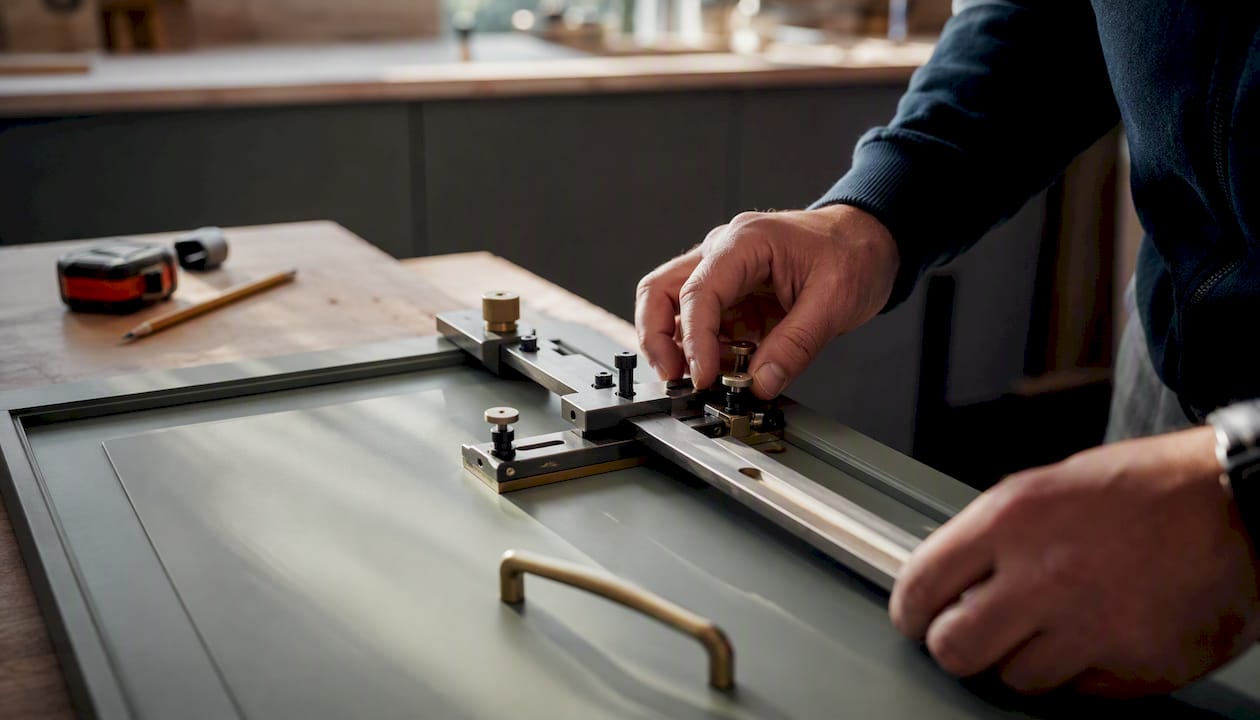
Plan cabinet knobs and pulls with a repeatable layout, sensible proportions and accurate drilling. A practical guide for kitchens, wardrobes and custom joinery.
Understanding door handle backset sizes is crucial for correct installations. Learn how to measure accurately to ensure a perfect fit.
Leave a comment
All comments are moderated before being published.
This site is protected by hCaptcha and the hCaptcha Privacy Policy and Terms of Service apply.