
Door Handle Backset: Sizes and How to Measure It
The backset is the distance from the edge of the door to the centre of the spindle or latch bolt. Get it wrong by five millimetres and the latch won't line up with the striker plate.
Australian doors fall into a small number of standard sizes:
- 60 mm on standard internal doors. The default across most modern builds and renovation stock
- 45 mm on narrow stile doors, French doors and older joinery where the door face is too tight for a deeper latch
- 70 mm on some commercial fitouts and older residential stock. Less common, but not rare
- 44 mm, 46 mm or 57 mm on mortice locks, fixed by the lock case rather than the handle
If you're specifying across a whole project rather than replacing a single door, this number decides whether the levers you've chosen will fit the doors already hung, or whether you're heading into rebore territory.
How to measure it
Five minutes and a steel rule. Add vernier calipers if you're checking spindle diameter at the same time, and a screwdriver in case the rose needs to come off.
- Open the door fully so you can see both the face and the edge
- Find the latch bolt or spindle hole on the door edge
- Measure from the outer edge of the door to the centre of the spindle or latch bolt
- If a rose is fitted, remove it to confirm you're measuring to the true centre
- Record the figure in millimetres and check it twice
The most common error by a wide margin is measuring to the edge of the bore hole rather than its centre. That alone accounts for a large share of returned hardware.
While the door is open, record these too:
- Backset
- Door thickness
- Bore hole diameter
- Spindle size
- Function: passage, privacy or entrance
A photo of the door edge with a tape measure alongside it costs nothing and settles any argument later.
What else decides whether hardware fits
Backset gets the attention, but it's one item on a longer list. Any of these can stop a lever seating properly even when the backset is correct.
Latch type. Tubular latches and mortice locks are not interchangeable, and the backset measurement means something different for each.
Bore hole diameter. Determines whether a new rose or backplate will cover the existing preparation cleanly.
Cross-bore depth. Has to match the latch body length or the mechanism won't seat.
Spindle size. Must match the lever's follower. Most Australian levers use an 8 mm square spindle, but older and imported hardware varies.
Door thickness. Affects which latch and fixing screws will work.
Rose or backplate diameter. Needs to be large enough to hide any previous door preparation.
Striker plate position. Must align with the new latch centre once everything is fitted.
Can you change a door's backset?
Sometimes, depending on what you're starting with.
Adjustable-backset latches are the simplest route, usually switching between 60 mm and 70 mm without touching the timber. They're a specific product category rather than a universal fix, so check availability before assuming one will solve the problem.
Reboring the door face and edge is the next step up. It works provided the new rose is large enough to conceal the old holes, which is worth checking against the rose diameter before committing.
Replacing the mortice case is the most involved option and usually means joinery work rather than a straight swap. This is locksmith or joiner territory, not a confident DIY job.
Mistakes that cause failed fitments
- Measuring to the edge of the bore hole instead of the centre of the spindle
- Measuring from the door face rather than the door edge
- Assuming a new rose will cover old fixing marks without checking its diameter
- Ordering before measuring, on the assumption that "standard" means the same everywhere
- Confusing tubular latch backset with mortice lock backset
- Ignoring spindle size, which leaves a lever fitted but not operating properly
Specifying across a project
For a single door, measure once and order. For a renovation running to a dozen doors or more, the process is different.
Doors hung at different times, or sourced from different suppliers, often don't share a backset. A house with original 1940s internal doors and a newer extension will typically have both 45 mm and 60 mm in the same building. Measuring a representative sample rather than one door prevents a mid-install surprise.
It's also worth deciding function per door before you order, not after. Passage sets for hallways and living areas, privacy sets for bedrooms and bathrooms, dummy sets for cupboards and non-latching doors. Getting this on paper first means one order rather than three.
Once the schedule is set, finish consistency does more visual work than any individual piece. Coordinating door handles, door knobs and cabinet hardware in the same finish across a project reads as considered in a way that mixing suppliers rarely does.
Ordering hardware that matches your measurements
With backset, bore diameter and spindle size recorded, choosing the lever becomes straightforward.
Bergamo's solid brass levers are built to standard Australian fittings, and every product page lists the spindle and rose details you need to confirm compatibility before ordering. Browse the full door handle range, or contact us to ask about sample availability if you want to check a finish against your joinery first.
If you're working through a schedule and want the dimensions confirmed before anything ships, send your measurements through the contact page and we'll check fit against your doors.
Frequently asked questions
What is backset on a door? The horizontal distance from the door edge to the centre of the spindle or latch bolt, measured in millimetres.
What is the standard door backset in Australia? 60 mm on most modern internal doors. 45 mm is common on narrow stile and French doors.
How do I measure it? Open the door, measure from the edge to the centre of the spindle or latch hole, and record it alongside door thickness and bore diameter.
Can I change my door's backset? Sometimes, using an adjustable-backset latch, a rebore with a larger rose, or a full mortice case replacement, depending on the door and lock type.
Does bore hole diameter matter as much as backset? Close to it. It determines whether a new rose will cover existing fixing marks and whether the latch will seat correctly.
Do all levers use the same spindle? No. 8 mm square is the Australian standard, but older and imported hardware can use different profiles that look similar and won't engage.
Read more
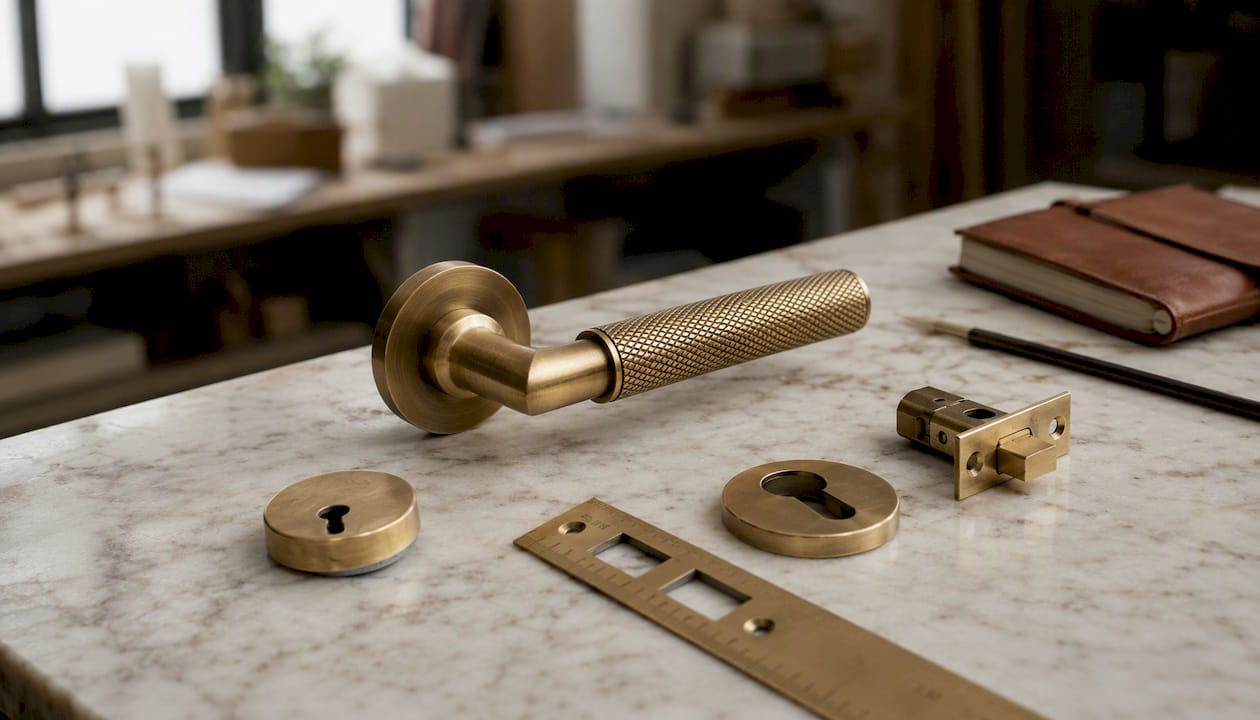
Discover how to identify and order the right door hardware parts, ensuring proper fit and compliance with Australian standards for your needs.

Passage, privacy, thumb turn, entry or dummy? A room-by-room guide to choosing the right door handle function, and counting what you need.
Leave a comment
All comments are moderated before being published.
This site is protected by hCaptcha and the hCaptcha Privacy Policy and Terms of Service apply.